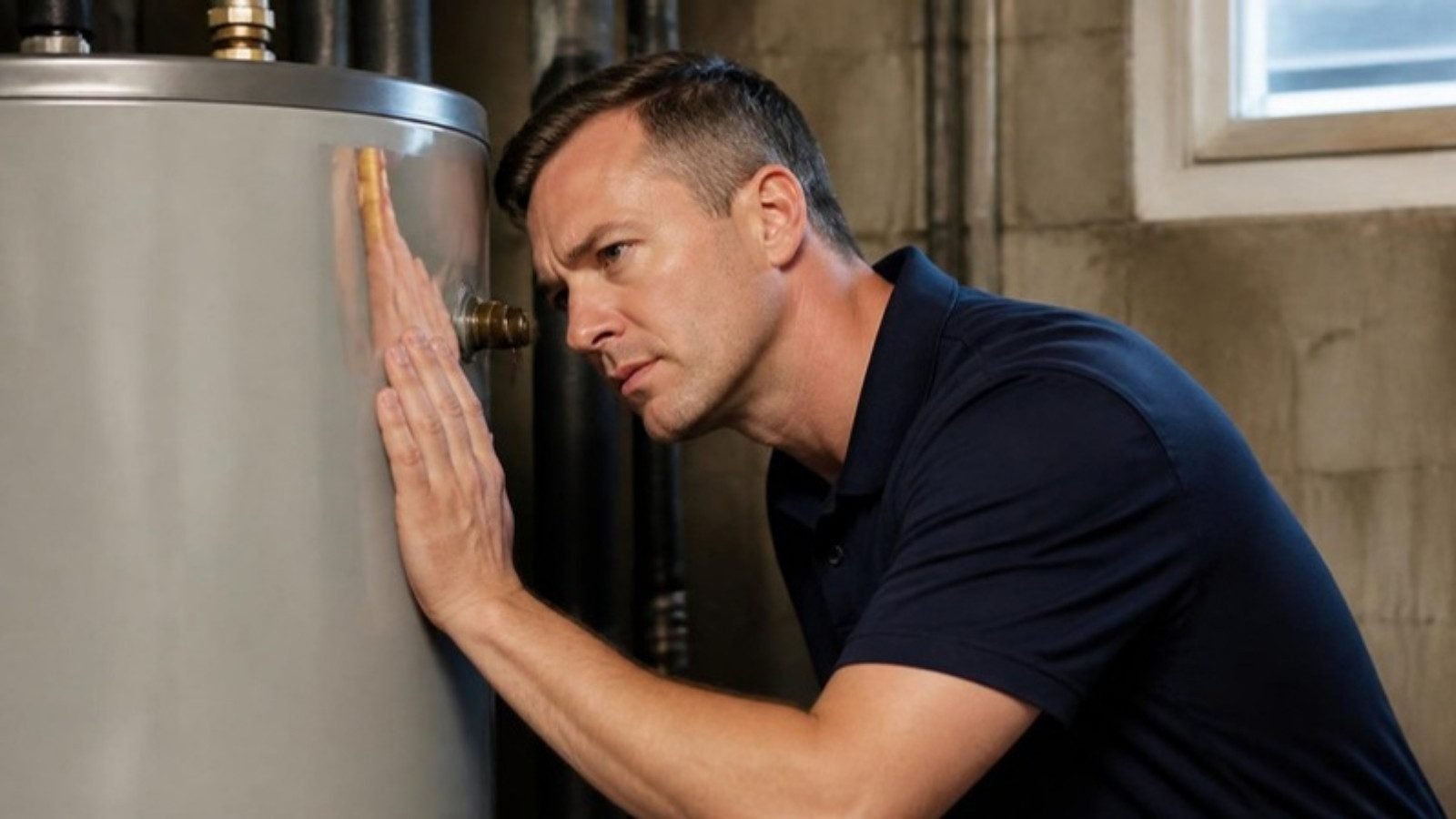
A water heater makes some noise every time it heats. Most of it is harmless, a few sounds point to maintenance, and a small number mean shut it down. The type of sound, when it happens, and which heater you have narrow it down quickly.
What each noise usually means
| Noise | When you hear it | Likely cause | What to do |
|---|---|---|---|
| Popping, rumbling, gurgling | While a gas burner runs or an electric lower element heats | Sediment on the tank bottom; water trapped under it flashes to steam | Flush the tank; plan ahead if the tank is older and the noise has gone on for years |
| Sizzling or crackling at the burner | First minutes of heating on a gas tank | Condensation dripping onto the burner | Normal; it stops when the tank is hot. Check for a leak if it continues |
| Sizzling or hissing inside an electric tank | While the elements heat | Scale building up on an element | Flush; an element coated in scale may need replacing |
| Ticking or tapping | As the heater warms up or cools down | Pipes and heat-trap fittings expanding and contracting | Usually harmless |
| Whistling or screeching | While water runs, or while heating | A partly closed supply valve, or pressure at the T&P relief valve | Make sure the cold supply valve is fully open; call if the T&P valve is discharging |
| Humming | Electric heater while heating | A loose element vibrating in the water | Technician tightens or replaces the element |
| Banging when a faucet or washer shuts off | Right after water stops | Water hammer in the pipes, not the heater | Pressure check; water hammer arrestors |
| Steady hum or fan noise | Hybrid heat pump heater in heat pump mode | Compressor and fan, similar to a dehumidifier | Normal. Rattling means a loose panel or fan |
| Clicking, then a whoosh | Tankless heater starting | Ignition sequence | Normal. Grinding or whining can mean fan wear or scale |
Sediment: the most common cause
Hard water leaves minerals behind as it heats, and they settle on the bottom of the tank. Water gets trapped under that layer, boils in small pockets and pops. Beyond the noise, sediment makes the heater work harder, insulates the water from the burner, and lets the tank bottom run hotter than it should. On an electric heater it buries the lower element. Central Ohio water is hard enough that most tanks collect some, which is why a hard water household benefits from an annual flush.
A flush drains water from the bottom of the tank until it runs clear. The maintenance guide covers the steps. On a tank that has never been flushed, go carefully: loosened sediment can clog the plastic drain valve or keep it from closing fully again. That is a good reason to have the first flush done as part of annual maintenance.
When a noise means shut it down
- Loud banging from the tank itself, or a noise that has suddenly become much louder.
- Any noise together with water on the floor, a dripping relief valve or rust-colored water. See water heater leaking.
- Screeching together with water hotter than the setpoint.
- A burning or scorching smell along with the noise.
In any of those cases, turn the gas control to OFF or switch off the breaker, close the cold supply, and call. Our diagnostic visit is free.
When a noise means plan for replacement
Years of rumbling on a tank past about ten years old usually means heavy sediment and a tank bottom that has been overheating for a long time. A flush may quiet it, but it does not restore the steel. If the heater is also slow to recover or the hot water has become rusty, it is time to price the replacement on your terms rather than waiting for the leak. How long water heaters last explains the age check, and the price builder shows installed options for your home.
Tankless owners: scale causes most tankless noise and error codes. See tankless descaling. For every other symptom, the water heater not working guide is the full symptom map.

Common questions
Is a noisy water heater dangerous?
Usually not. Popping from sediment and ticking from pipes are common and not dangerous on their own. It becomes a safety issue when the noise comes with a leak, a discharging relief valve, water hotter than the setpoint or a burning smell.
Why is my water heater louder after a flush?
A flush can break up sediment without removing all of it, leaving loose pieces that rattle or pop for a few heating cycles. If the noise does not settle within a few days, flush again or have the tank checked.
Does hard water make water heaters noisy?
Yes. Hard water leaves the minerals that become sediment in a tank and scale on elements and in tankless heat exchangers. Annual flushing, and descaling for tankless units, keeps the noise and the efficiency loss down.
Is a humming hybrid water heater normal?
Yes. A heat pump water heater runs a compressor and a fan, so it hums much like a dehumidifier. Rattling, grinding or a sudden change in the sound is worth a service call.