Buying a water heater should be a process you can see the whole way through: what it costs, when someone arrives, what they check, what they install and what you are left holding when they leave. Here are the five steps, what happens at each one, and what the technician documents so the record stands on its own.
The five steps
Get your price online
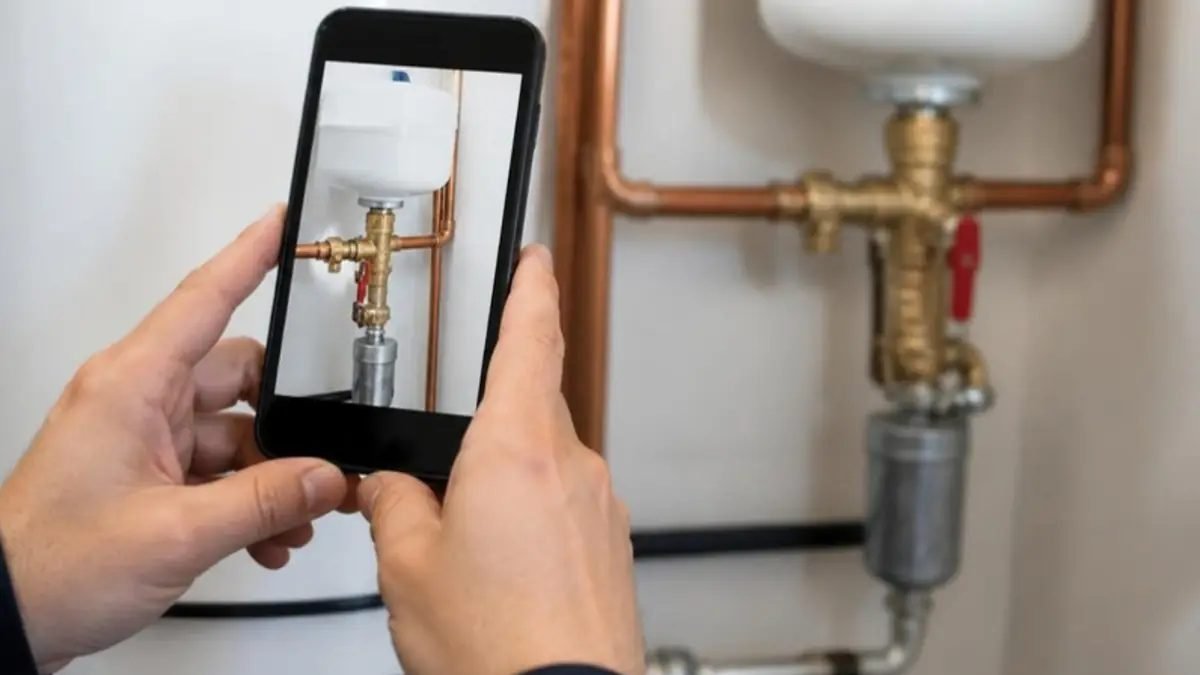
Use the quote builder to choose a heater type, size and tier. If you are not sure which heater you have, the find-my-heater tool suggests a likely match from a photo and a few questions, and the size calculator checks whether the size still fits your household. You see a starting-at installed price that includes the unit, standard installation, the permit at cost, haul-away and startup testing, with no personal information required.
Book a two-hour window
Our live calendar shows open windows between 7 am and 7 pm, seven days a week. Same-day windows are available in the Columbus core and inner suburbs when booked before 1 pm; the outer ring is next-day. Choose a window, enter your address and contact details, and you receive a confirmation with the heater, tier and starting-at price you selected. A 50% deposit, paid through the secure link on your estimate, confirms the window. Until it is paid, the window is held for up to four hours.
On-site verification and written price
The technician arrives inside the window and checks the installation before touching anything: fuel and vent type, venting condition and draft, combustion air, gas line size and connector, or the electrical circuit on electric and hybrid units, static water pressure and whether the system is closed, the shutoff valve, the T&P discharge, the drain path and the route in and out. You receive an estimated installed price in writing. In most homes it matches the online price. Where a code item is needed, it is added from the published list, marked required, recommended or optional, and you approve it before work starts.
Installation and startup testing
The old heater is shut down, drained, disconnected and carried out. The new heater is set, connected with new water connections and, on gas units, a new connector and sediment trap. The T&P discharge is run to an approved termination. An expansion tank is installed and charged if the system is closed. The heater is filled and purged, checked for leaks at every joint, and started. Gas units get a gas leak check and a draft check at the hood or vent. Electric and hybrid units get a voltage and amperage check. The setpoint is 120°F unless you ask for something else, and the outlet temperature is confirmed at a tap.
Documentation and warranty
Before leaving, the technician walks you through the installation and the record. You receive the photos, the model and serial numbers, the permit record, the tier’s tank and workmanship warranty terms, and, for Authority customers, enrollment in the first year of the maintenance plan. Payment is taken when this is complete.
What the technician documents
A water heater installation should leave a record that anyone can read later: you, a home inspector when you sell, a manufacturer’s warranty department or a future technician. Ours includes the following.
| Item | Why it is recorded |
|---|---|
| Photos of the old installation before work | Establishes the starting condition, including any code items that were missing. |
| Model and serial number of the new heater | Needed for the manufacturer’s warranty and for any future parts order. The serial number encodes the manufacture date. |
| Permit number and jurisdiction | Proof that the work was permitted. Useful at resale and for insurance. |
| Fuel and vent verification | Vent type, draft check result on atmospheric units, vent termination on power vent and tankless units, combustion air source. |
| Gas pressure and leak check, or electrical readings | Confirms the supply is correct for the unit and every gas joint is tight, or that voltage and amperage match the nameplate. |
| Static water pressure and expansion control | Whether the system is closed, the measured pressure, and the expansion tank size and charge. |
| T&P discharge and drain pan | That the relief discharge terminates correctly and, where installed, that the pan drains. |
| Setpoint and outlet temperature | Setpoint at the control and the measured temperature at a tap. |
| Photos of the finished installation | The completed work, connections, venting and labeling. |
| Items you approved beyond the starting-at price | Each adder with its status and price, so the invoice matches the approvals. |
Warranty registration
Two warranties apply to every installation, and they are documented separately. The tank or heat exchanger warranty is the manufacturer’s, typically 6, 10 or 12 years for tanks and 12 to 15 years for tankless heat exchangers, depending on the tier and unit. For heaters we supply, we register that warranty with the manufacturer and include the confirmation in your documentation. For customer-supplied units, you are the purchaser and the registrant, and we give you the serial number and installation date you need.
The workmanship warranty is ours: 1 year on Essential, 2 years on Preferred and 5 years on Authority. It covers the connections, venting, fittings and code items we install. It is printed on your invoice with the start date. Keeping the heater maintained, which the annual plan handles for $189 per year, keeps both warranties in good standing and gives you a written record for any claim.
What does not happen
- No one calls to upsell you before the visit. The tier you choose online is the tier the technician brings, and any change is your decision on site.
- No work starts before you have approved the estimated installed price in writing.
- Nothing is added to the price during the job without a written approval from you first.
- The only payment before the work is the 50% deposit that confirms your window; the balance is due when the installation is complete, tested and documented.
- No review request goes out until the job is finished and you have had time to use the heater. Reviews are collected through Google and verified after service.
Wattson here, briefly. I am the water drop on this site. The one thing I ask: keep the photos and the serial number somewhere you can find them. Ten years from now, the person replacing this heater will thank you, and it might be us.
If you are replacing in an emergency
The steps are the same, compressed. Shut off the water and fuel using the guide on the emergency page, check live availability, and book the earliest window. Same-day priority after the 1 pm cutoff or outside 7 am to 7 pm carries a $199 emergency fee that we state before booking. The installed price of the heater itself does not change.
If you are not sure whether to replace
Book a free diagnostic visit instead. The technician runs the same verification checks, tells you what has failed and what it costs to fix, and If replacement is the better answer, the checks are already done and the estimated installed price follows immediately. The repair-or-replace guide explains the tests we use.
Who we are
Ohio Water Heater Authority is a Transit & Flow™ company at 10 N. High St., Suite 217, Columbus, OH 43215. We are independent and privately owned, not a government agency and not affiliated with the State of Ohio or any utility. Work is performed by appropriately licensed personnel or partners and follows the 2024 Ohio Plumbing Code, the Residential Code of Ohio, the Ohio fuel gas provisions and the manufacturer’s installation instructions. Read more on why we built the company this way and our editorial standards.

Start with the price
Choose a heater and tier, see the installed starting-at price, and book a two-hour window. Or call 844-792-8374, answered 24/7.