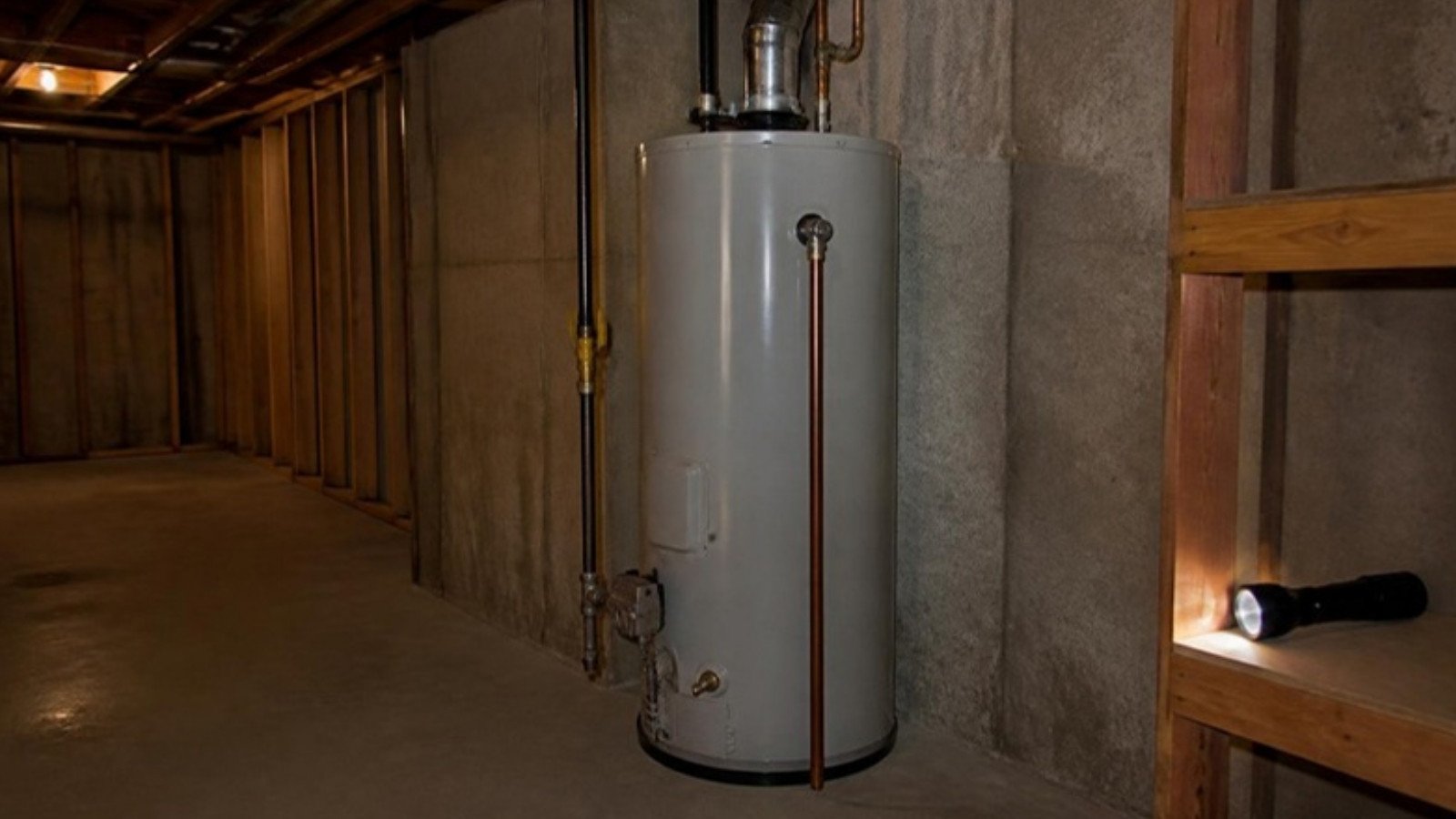
No hot water anywhere in the house usually means the heater has shut itself down, lost its fuel or power, or stopped getting water. This guide covers the first fifteen minutes: the safety stops, the few checks that are safe on each type of heater, and what to write down before you call. For other symptoms, such as noise, odor or water that runs out early, our water heater troubleshooting guide has the full table of causes.
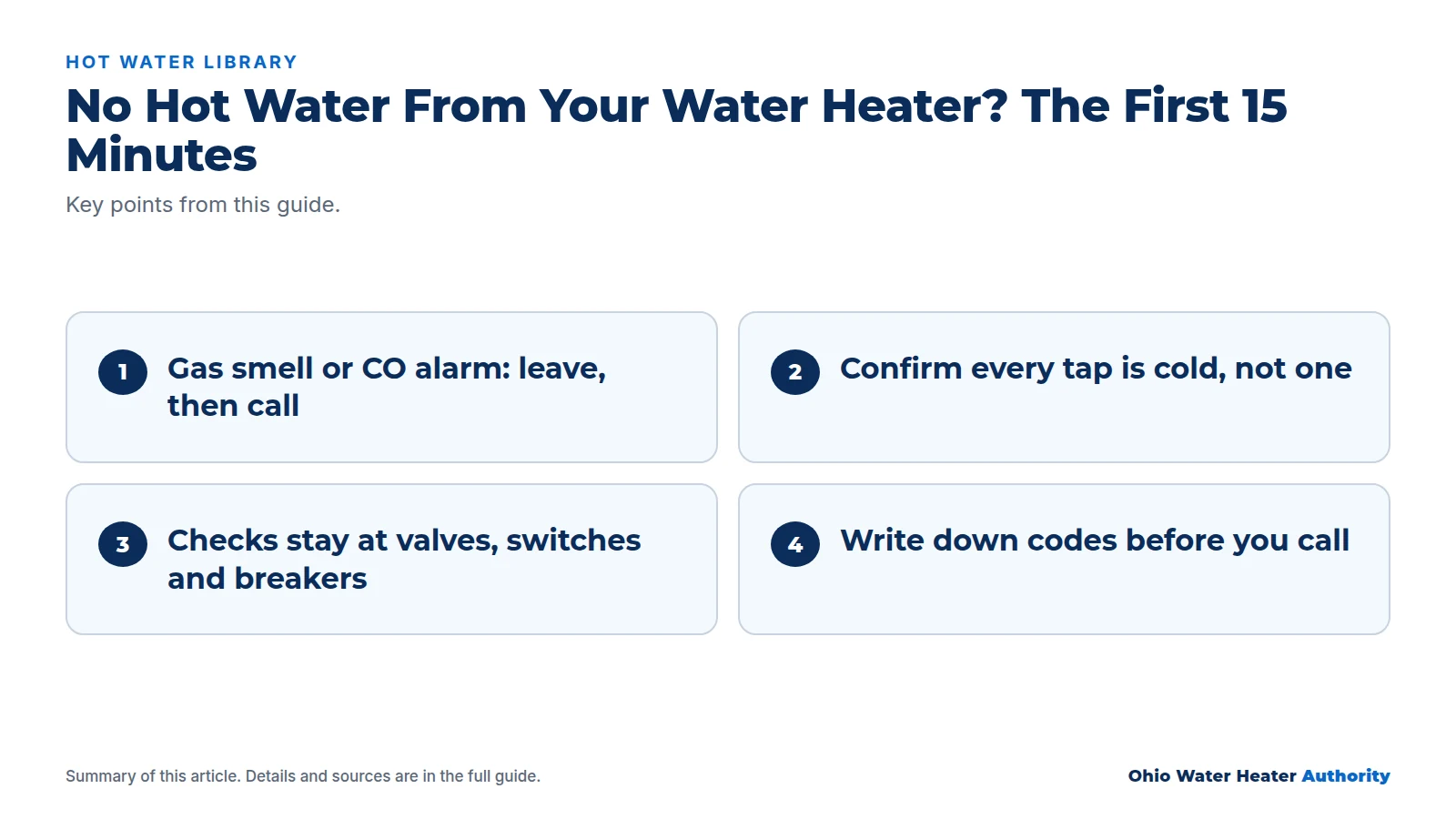
Before you touch anything: the reasons to stop
Spend the first minute looking, listening and smelling from the doorway. A heater that has shut down is often protecting you from something.
Gas smell or carbon monoxide. If you smell rotten eggs or sulfur, or hear hissing near a gas line, do not light anything or touch switches. Leave the house with everyone in it, then call 911 and your gas utility from outside. Columbia Gas of Ohio lists its 24-hour emergency line as 1-800-344-4077. If a carbon monoxide alarm sounds, or people have headaches, dizziness or nausea, get everyone to fresh air and call 911.
Three other findings mean the heater stays off while you arrange service:
- Water around the heater. If you can reach the cold water shutoff valve on top without standing in water, close it. Our leaking water heater guide covers what to do next.
- Floodwater reached the controls. The gas heater manual we reviewed says not to use the appliance if any part has been under water until a technician inspects it and replaces the affected controls.
- Soot, scorching or a burning smell. Something overheated. On a gas heater, turn the gas shutoff handle across the pipe to close it. On an electric heater, switch off its breaker.
Minutes 1 to 3: confirm it is the heater, not one faucet
Run the hot side of two or three fixtures on different floors for a full minute each, because hot water has to travel through pipes that have cooled.
- Cold everywhere. The heater is the problem. Keep going.
- Cold at one fixture only. The heater is probably fine. A stuck or failed cartridge in a single-handle faucet or shower valve is a fixture repair.
- Warm for a moment, then cold. If nobody ran a lot of hot water in the past hour, treat it as cold everywhere.
Then ask what changed: a power outage, gas or electrical work, a water shutoff, a cold night, or someone turning the heater down before a trip. Each points to a different cause.
Minutes 3 to 10: first checks by heater type
Identify the heater first, because the safe checks differ. Every check below is visual or uses a shutoff valve, a switch, a plug or a breaker. None involve removing covers or working near live wiring.
| Heater type | How to recognize it | Safe first checks | Stop and call when |
|---|---|---|---|
| Gas tank, standard vent | Metal vent pipe on top; gas control on the front | Gas shutoff open; temperature setting; status light or pilot; other gas appliances working | A fault code shows, the pilot will not stay lit, or you see soot |
| Gas tank, power vent | Plastic vent pipe and fan motor on top | All gas tank checks, plus the plug, outlet, switch and breaker | A vent safety switch has tripped |
| Electric tank | No vent; electrical conduit on top | Breaker fully off, then on, once; any timer or off-peak control | The breaker trips again, or there is still no heat after a few hours |
| Hybrid heat pump | Electric tank with a fan and display on top | Breaker; the message or code on the display | A code returns after the breaker check |
| Tankless gas | Wall-mounted box with a digital display | Display lit; error code; hot tap fully open; water shutoff valves open | A code returns after one reset, freezing is possible, or it leaks |
Gas tank heaters
Find the shutoff valve on the gas pipe feeding the heater. A handle in line with the pipe is open; across the pipe is closed. The gas heater manual we reviewed lists this as the first check for no hot water. If your stove and furnace do not work either, the problem is the gas supply, and the call goes to your gas utility.
Next, look at the control on the front of the tank. A dial left on vacation or the lowest mark can explain cold water by itself. Your owner’s manual shows the normal setting; if you are unsure, leave the control as it is and mention the setting when you call. If the control has a status light, count the blinks and compare them with the chart on the label. If a standing pilot is out, the lighting instructions on the label are the only procedure to follow, one attempt only. Our guide to a pilot light that will not stay lit explains what each failure pattern means.
Power vent gas heaters
A power vent heater uses a fan to push exhaust out, and its controls run on household current. The manual we reviewed requires a 120-volt supply and lists the control’s on and off switch among its first checks. Confirm the cord is plugged in, the outlet has power, the switch is on and the breaker has not tripped. Some models have a manual reset switch on the vent or draft hood that trips when exhaust is not leaving properly. The manual calls for checking the vent for blockage before it is reset, so leave it alone and report it.
Electric tanks and hybrids
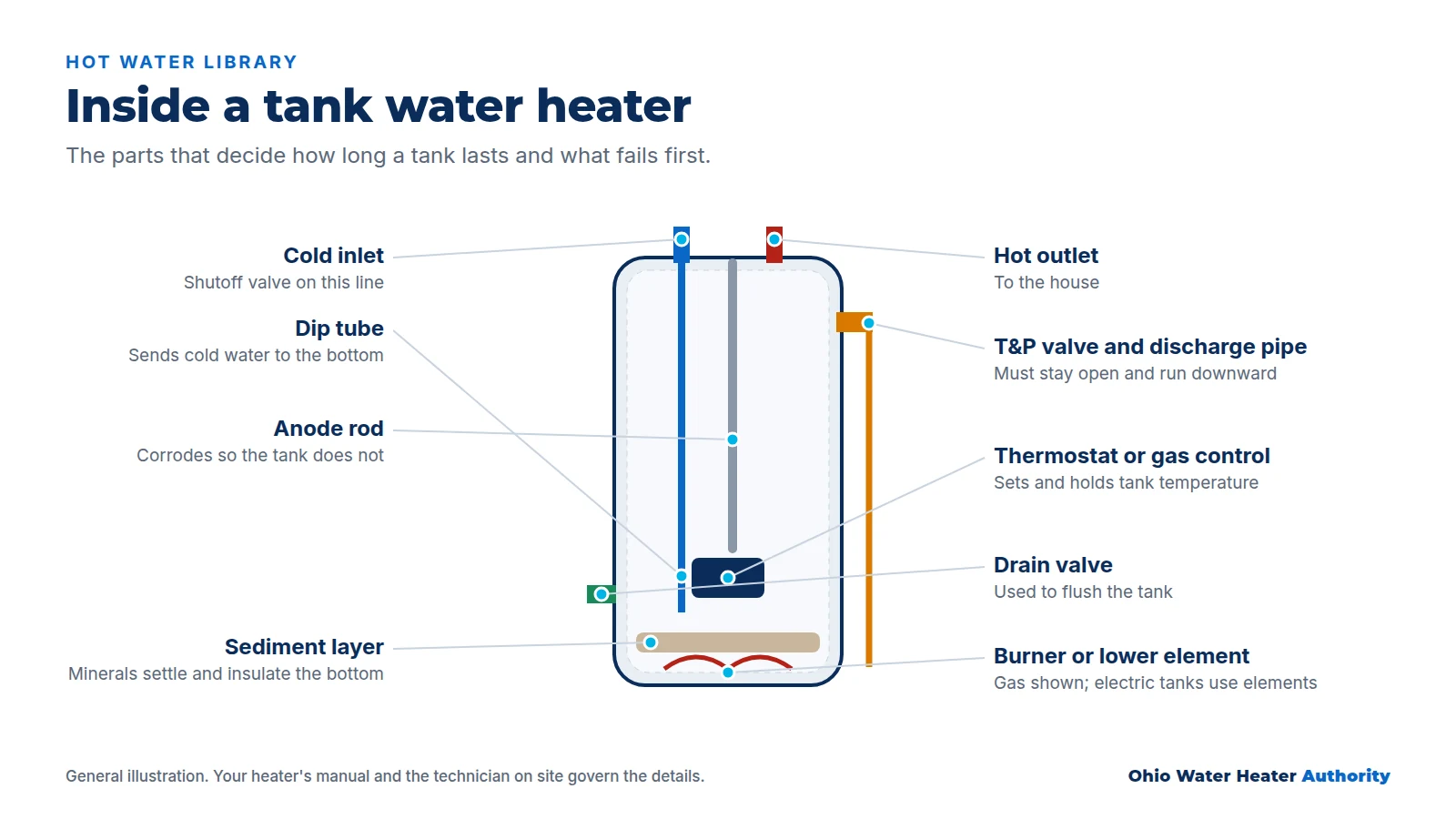
Start with the breaker. A tripped double-pole breaker can rest between on and off, so switch it fully off, then back on, one time. If the heater runs on a timer or off-peak control, confirm it has not been changed. After power returns, allow time for the tank to reheat.
Electric tanks also have a high-limit switch. A manufacturer service handbook describes it cutting power to the elements if the top of the tank reaches 180°F, after which it must be reset by hand. That button sits behind an access panel near terminals carrying 240 volts, and a trip means something overheated, so it is a technician step. Leave the panels on. A hybrid is an electric heater with a display: same breaker check, and write down any message word for word.
Tankless gas heaters
A tankless heater only fires when enough water flows through it. One major manufacturer’s user manual sets that minimum at half a gallon per minute, so open one hot tap all the way rather than a trickle. A gas tankless unit still needs household electricity for its controls, so a dark display points to the plug, outlet or breaker. Confirm the shutoff valves on the lines under the unit are open.
Write down any error code exactly. Some models allow one reset from the front panel, as the owner’s manual describes; if the code returns, stop. In winter, the same manual notes that freeze protection needs electricity, so an outage during a cold snap can freeze the unit. If no water flows from the hot side after a cold night or an outage, leave the unit off and say so when you call.
Minutes 10 to 15: when to stop and call
These fifteen minutes rule out simple causes; they are not a repair. Stop and call when:
- A breaker trips a second time.
- A fault code or status light returns after one reset.
- A standing pilot goes out again after one relight.
- A vent safety switch or high-limit switch has tripped.
- You see soot, scorching, rust flakes on top of the heater or damaged wiring.
Do not turn the temperature to the highest mark, relight or reset over and over, or remove access panels or the burner cover. Never cap the relief valve pipe. If you closed a shutoff, leave it closed.
What to tell the dispatcher
A clear description helps the dispatcher send the right parts and lets the technician start with the likely cause. Have these ready when you call 844-792-8374 or use our contact page:
- The heater type: gas tank, power vent, electric, hybrid or tankless.
- A photo of the rating plate, or the brand, model and serial number.
- Exactly what you see: status light blinks, the error code, or the breaker result.
- What changed first: an outage, flooding, a cold night, gas or electrical work, or a water shutoff.
- What you already did: valves closed, breakers switched, resets tried.
- Anything near the heater: water, a smell, soot, noise or a tripped vent switch.
- Where the heater is and how to reach it.
Scheduling depends on your address and the day’s calendar, and the dispatcher will explain the options.
What a diagnostic visit costs
A diagnostic visit is free. The technician finds what failed and gives you the repair price in writing before any work begins. Nothing is added without your approval. For after-hours service, an emergency fee of $199 applies only when it is stated to you before you book. Our water heater repair page lists common repairs and when replacement makes more sense. Work is performed by appropriately licensed personnel or partners.
What to do next
If a safety stop applied, leave the heater off and make the safety call first. If the checks above did not bring back hot water, call 844-792-8374, answered 24/7, with your notes from the dispatcher list, or read about our water heater repair service before you book.

Common questions
Why do I have no hot water after a power outage?
An electric tank or hybrid stops heating while the power is out and needs time to reheat once it returns. Power vent and tankless gas heaters also rely on electricity for their controls, so check the breaker and the outlet they plug into. If a breaker trips again after one reset, call for service.
Can I reset my water heater myself?
You can switch a tripped breaker fully off and back on once, and you can use a front-panel reset if your tankless owner’s manual describes one. The high-limit reset on an electric tank sits behind a panel near 240-volt wiring, and a vent safety switch on a power vent heater calls for a vent check first. Leave both to a technician.
Is no hot water an emergency?
It is an emergency when it comes with a gas smell, a carbon monoxide alarm, water pooling around the heater or signs of scorching. Without those, it is urgent but not dangerous. If the safe checks in this guide do not restore hot water, book a diagnostic visit.
Why does my tankless water heater run cold at a trickle?
A tankless heater fires only when the flow through it passes a minimum. One major manufacturer sets that minimum at half a gallon per minute for its models, so a barely open tap may never start the burner. Open the hot tap fully, and if it still runs cold, note any error code and call.
Should I relight the pilot myself?
If your heater has a standing pilot, the lighting instructions are printed on the label on the tank, and one attempt that follows them exactly is reasonable. Never relight anything if you smell gas. If the pilot goes out again, stop, because that points to a failed part or an air or venting problem.