
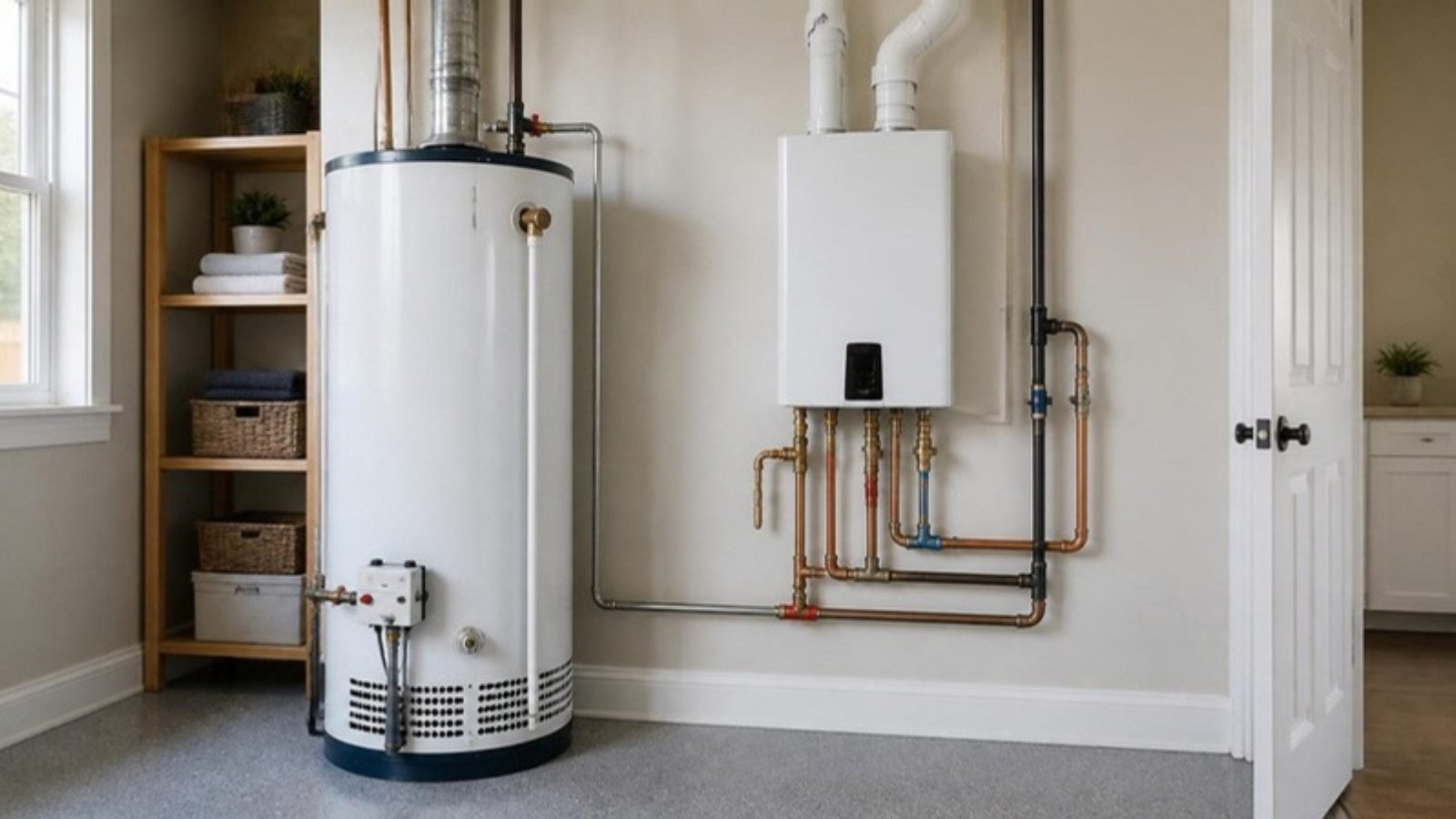
Tankless is the upgrade people ask about most, and the one where a phone quote from someone else most often falls apart on install day. The reason is not the unit. It is two numbers in your basement that the brochure never mentions: how much gas your line can deliver, and whether there is a path for a new vent. This post explains both, how we check them before you commit, and why the answer in a lot of Columbus basements is a different upgrade than the one you walked in asking for. The full comparison of the two technologies is in tank vs tankless; this is the part that is specific to the house.
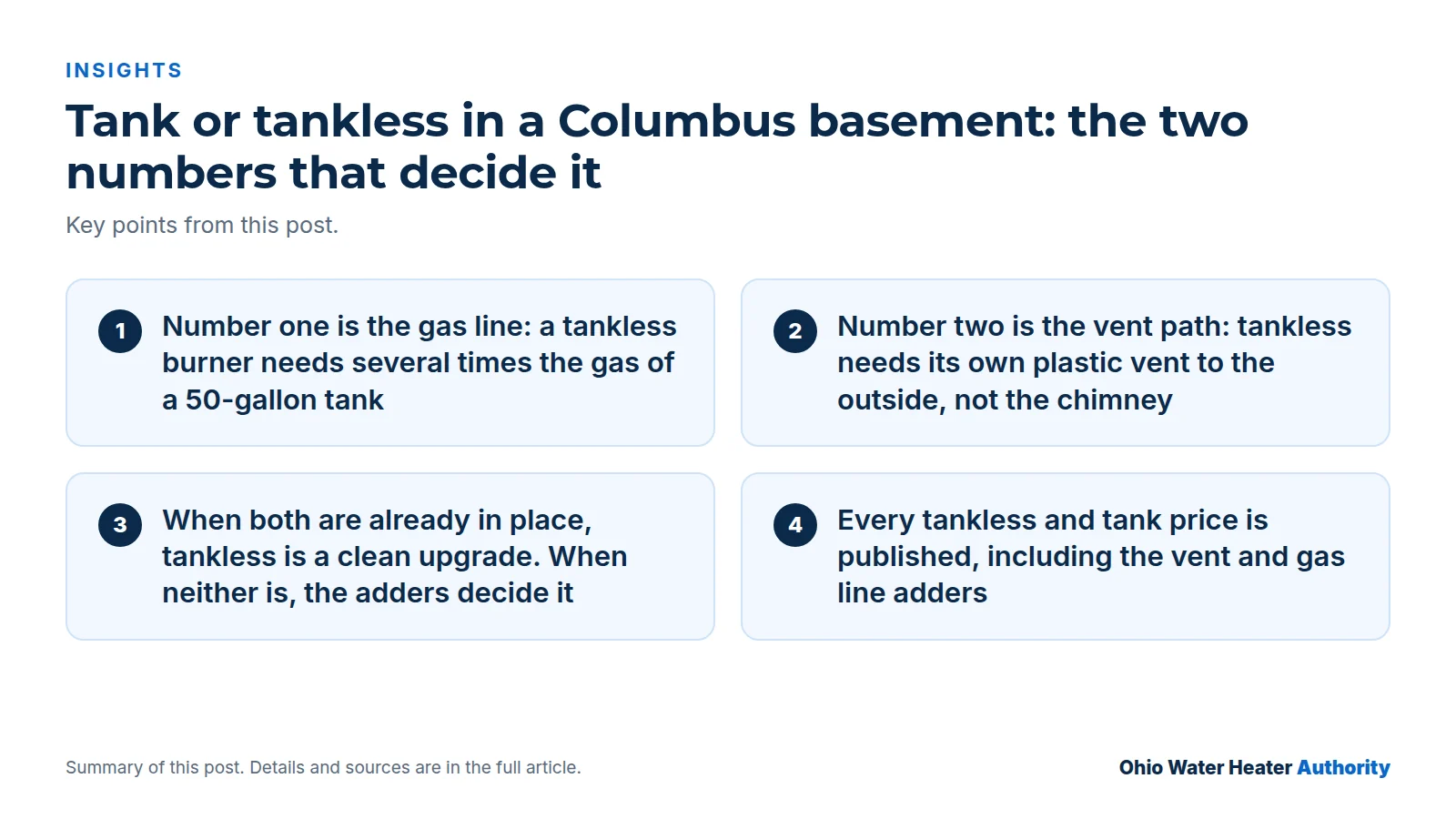
Number one: the gas line
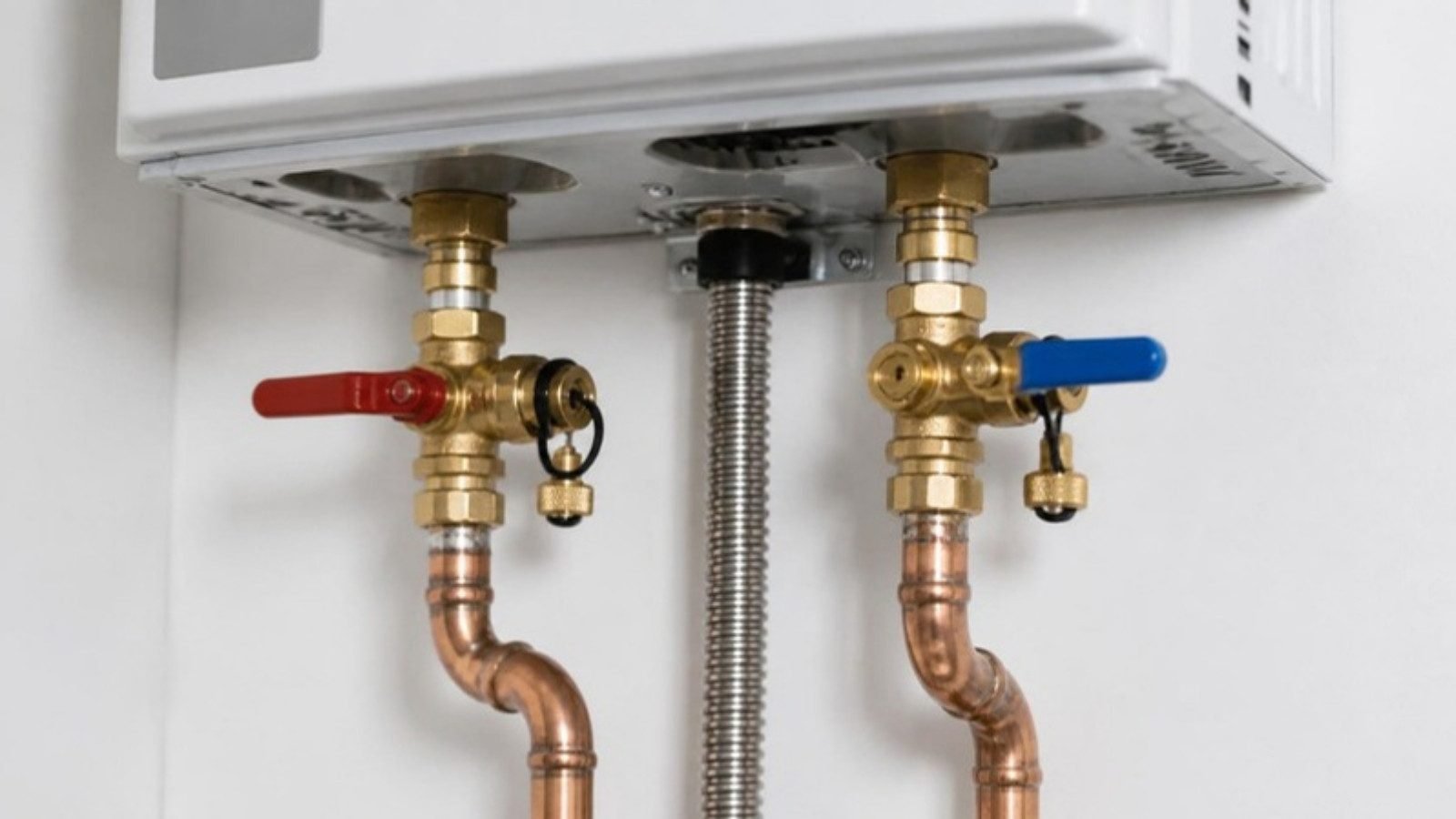
A standard 50-gallon atmospheric gas tank heats water slowly all day with a small burner. A tankless unit heats water only while a tap is open, so it has to do in seconds what the tank does in an hour, and its burner is several times larger. That gas has to arrive through the pipe that is already in your basement. If that pipe was sized for a tank, a furnace and a range, it may not have the capacity to add a tankless unit, and a tankless heater on an undersized line does not fail loudly. It just never delivers the gallons per minute you paid for, especially in January when the incoming water is around 42°F.
This is why the first thing a technician does on a tankless job is look at the meter, the pipe size and the run length, and add up every gas appliance in the house. If the line is adequate, the install proceeds at the published price. If it is not, the fix is larger piping from the meter or the branch, which our price book lists as a gas line upsize, sized on site before final pricing. Gas piping beyond the heater connection is plumbing work; when a job needs it, Transit & Flow Plumbing & HVAC, our sister company, does it under one schedule.
The question to ask any installer. “What size is my gas line, and what is the total connected load with the tankless added?” If the answer is a shrug, the quote is a guess.
Number two: the vent path
An atmospheric tank vents up through a metal flue, usually into a masonry chimney or a B-vent. A tankless unit cannot use that. Most residential tankless units are condensing and vent through plastic pipe (PVC or polypropylene) that has to run to an outside wall or through the rim joist, with the termination a set distance from windows, doors and the gas meter. The question is whether there is a reasonable route from where the heater sits to the outside.
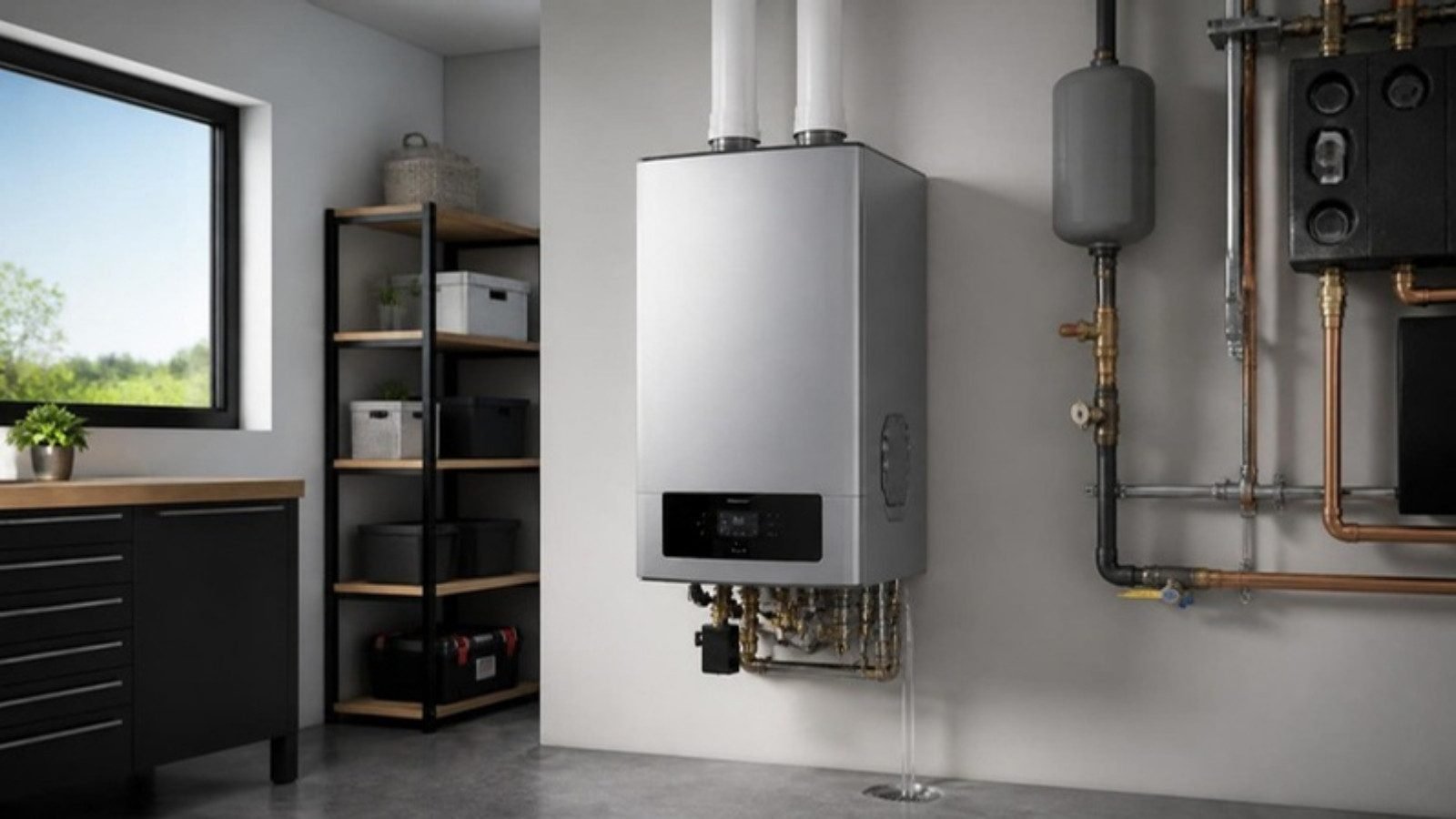
In a Columbus basement that usually comes down to geography. A heater on an outside wall or near the rim joist has a short route and the vent is a modest adder, priced per 10 feet. A heater in the middle of a finished basement, or against the chimney on an inside wall, may need a long run through finished ceiling, or a relocation to a better spot. Both are doable. Both are quoted before anyone cuts a hole.
A side note for homes with a power vent tank today: you already have a plastic vent to the outside, and the gas line was sized for a larger burner than an atmospheric tank. Those homes are the easiest tankless conversions in the area.
Four basements, four answers
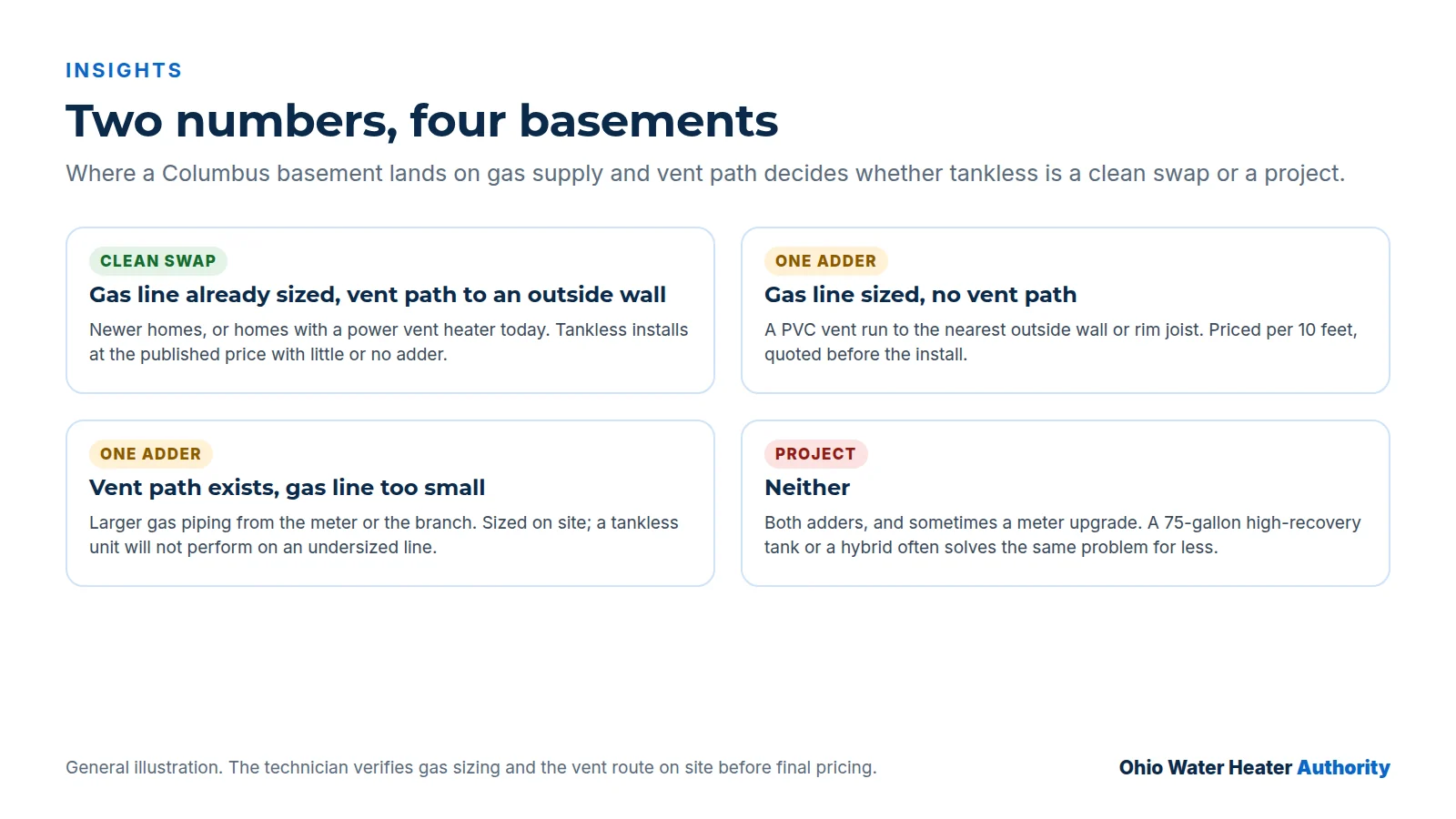
| Your basement | Tankless verdict | What it costs beyond the unit |
|---|---|---|
| Gas line sized, short route to an outside wall | Clean swap | Little or no adder. Published tankless price applies. |
| Gas line sized, no easy vent route | One adder | PVC vent run, $299 per 10 feet, quoted on the route the technician maps. |
| Vent route exists, gas line too small | One adder | Gas line upsize, sized on site. A new sediment trap and connector ($349 standard gas modification) are typical on any gas replacement. |
| Neither | A project, and often the wrong project | Both adders, sometimes a meter upgrade. Compare with a 75-gallon high-recovery tank or a hybrid before deciding. |
What the two options cost, published
Here are the live installed prices for a 50-gallon gas tank and a gas tankless unit, the two most common choices on this decision. The tankless tiers include isolation and service valves on Preferred and Authority, which make annual descaling a 45-minute job. Adders are listed on the pricing page and shown in the quote builder before you book.
Essential
Dependable, code-compliant replacement
Starting at $1,949
- 6-yr tank + 1-yr workmanship warranty
- Heater, standard installation and haul-away
Preferred
Better efficiency and longer protection
Starting at $2,599
- 10-yr tank + 2-yr workmanship warranty
- Heater, standard installation and haul-away
- Thermal expansion tank (2 gal) included
Authority
Premium system plus enhanced protection
Starting at $3,899
- 12-yr tank + 5-yr workmanship warranty
- Heater, standard installation and haul-away
- Thermal expansion tank (2 gal) included
- Drain pan with drain connection included
- Leak sensor with automatic shutoff valve included
- +1 more included
Estimated installed prices for Central Ohio. Your online estimate is based on the installation details you provide. A technician verifies conditions before work begins, and if anything changes the price we show and explain the difference before proceeding.
Essential
Dependable, code-compliant replacement
Starting at $4,349
- 12-yr heat exchanger + 1-yr workmanship warranty
- Heater, standard installation and haul-away
Preferred
Better efficiency and longer protection
Starting at $5,749
- 15-yr heat exchanger + 2-yr workmanship warranty
- Heater, standard installation and haul-away
- Tankless isolation and service valve kit included
Authority
Premium system plus enhanced protection
Starting at $7,549
- 15-yr heat exchanger + 5-yr workmanship warranty
- Heater, standard installation and haul-away
- Tankless isolation and service valve kit included
- Annual maintenance plan included
Estimated installed prices for Central Ohio. Your online estimate is based on the installation details you provide. A technician verifies conditions before work begins, and if anything changes the price we show and explain the difference before proceeding.
When tankless is the right call, and when it is not
- Right call: the gas line and vent route are already there, the household runs out of hot water in the peak hour, and space in the mechanical room is tight. Tankless gives endless hot water at a flow rate, and a wall unit frees a floor footprint.
- Right call with eyes open: one adder is needed and the household wants the long equipment life and efficiency. Budget the adder as part of the unit price, not as a surprise.
- Usually not: both numbers are wrong and the real complaint is “we run out during the third shower.” A 75-gallon high-recovery tank or a hybrid solves that for less, with no gas or vent work, and the published price says so.
- Never on a guess: any tankless quote that was not preceded by a gas load calculation and a vent route is not a quote. Ask for both in writing.
What to do next
Build both prices in the price builder and compare them side by side; the builder asks about your current vent and fuel so the right adders show up. If you want the two numbers checked before you decide, book a two-hour window and the technician will map the gas load and the vent route on site. Questions first: 844-792-8374; phones are answered 24/7.
See the tank price and the tankless price side by side
Both are published, adders included. Build each in three minutes and decide with real numbers.

Common questions
Can I replace my tank water heater with a tankless one?
Usually, but two things in the basement decide how big a job it is: whether the gas line can deliver the much larger burner a tankless unit needs, and whether there is a route for a new plastic vent to the outside. When both are in place it is a clean swap at the published price. When one is missing, it is one quoted adder. When both are missing, a 75-gallon high-recovery tank or a hybrid is often the better buy.
Why does a tankless water heater need a bigger gas line?
A tank heats water slowly with a small burner; a tankless unit heats water on demand with a burner several times larger. The existing gas pipe was sized for the appliances the house already had. If it cannot deliver the added load, the tankless unit never reaches its rated flow, especially against Central Ohio’s roughly 42°F winter inlet water.
Can a tankless water heater use my chimney?
No. Most residential tankless units are condensing and vent through PVC or polypropylene pipe to an outside wall or the rim joist, with the termination kept a set distance from windows, doors and the gas meter. The metal flue that serves an atmospheric tank is not suitable.
How much does it cost to add the vent or upsize the gas line?
A PVC vent run is $299 per 10 feet, quoted on the route the technician maps. A standard gas modification with a new sediment trap and connector is $349. A full gas line upsize is sized on site before final pricing because pipe size and run length vary by house. All of it is shown before anything is booked.
Is tankless worth it in Columbus?
It depends on the house more than the climate. If the gas and vent are in place and the household runs out of hot water in the peak hour, yes: endless hot water at a flow rate, a small wall footprint, and a long-lived heat exchanger. If both adders are needed and the complaint is capacity, a high-recovery tank or a hybrid usually solves it for less.
Do you check the gas line before quoting tankless?
Yes. The quote builder asks about your current heater, fuel and vent so the right adders appear online, and the technician confirms the gas load and the vent route on site before final pricing. Nothing is added without your approval.